Garden Path Food

The pleasure and peace of growing, harvesting and eating your own food

  • About
  • Bones of the Garden
  • Philosophy
  • Recipes
    • Moroccan Pumpkin Soup
  • The Garden Path
  • This Month’s Harvest

Popeye all year round

Posted by gardenpathfood on April 10, 2013
Posted in: Autumn foods, Eating Seasons, Health, Links to other sites, Spring foods, Spring Jobs, Summer foods, The plants in my garden, Work Season. Tagged: annual, Ceylon Spinach, herbs, in season, kale, links, Malabar Greens, silverbeet, summer food, wholefoods. 1 Comment

I got a bit excited on the weekend when I went to the Hervey Bay markets and found a summer spinach. Spinach is such a useful vegetable but with the very hot summers out here, it didn’t make it past November very successfully. Still, I’d had about 6 months out of it.

Otherwise known as Ceylon Spinach or Malabar Greens, this summer growing spinach like plant (Basella alba) grows best on a small IMG_0019trellis and dies off in winter but is apparently very good at setting seed. Since, I love to find babies in the garden, this plant would suit me well, I thought.
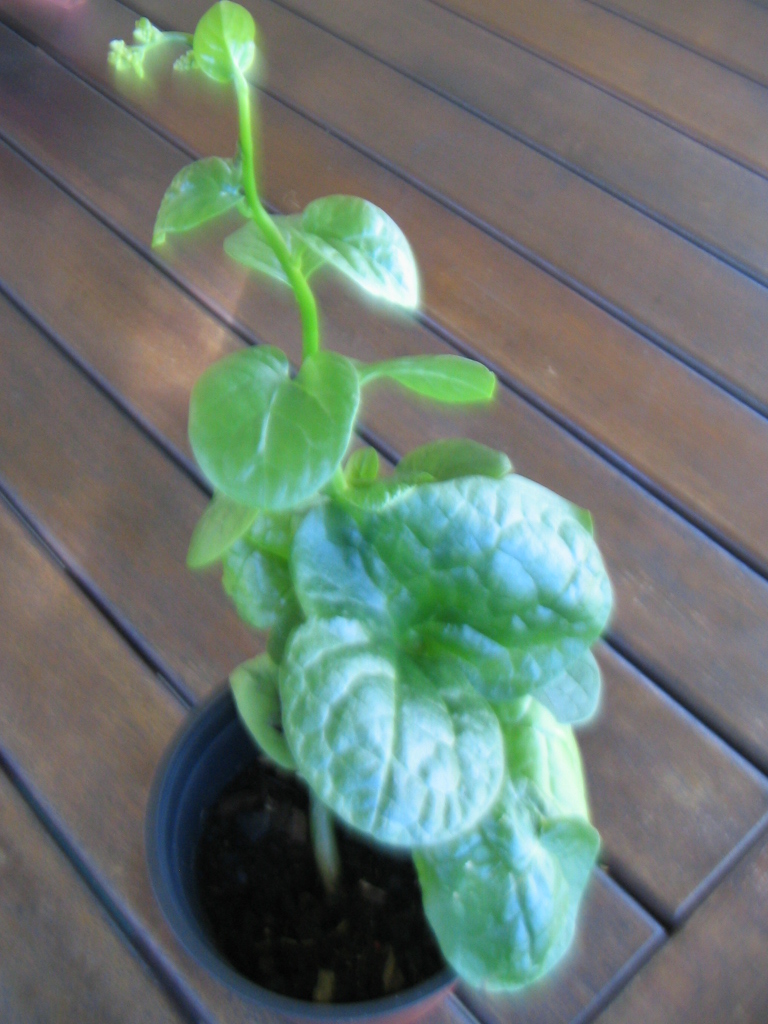
It seemed like the perfect solution, English Spinach, kale and silverbeet in the winter and Malabar Greens in the summer but on a second look and some discussion with the lady who sold the plant to me, we decided it would frost.  It is a tropical plant after all.  I almost put it back and then thought ‘well, it’s going to die back in winter anyway so let’s find the best spot possible in the garden for it, make sure it has a seed bed and watch what happens. ‘ I do have a back up plan though- I planted one at the house in Hervey Bay as well where the winters are much less harsh and the springs and early summer are more humid.  So watch this space…….. and while you are waiting you could also check out these two information sites.

Suzi you will love this one but she does warn you not to use it in your smoothies!!!

http://www.thewellnesswarrior.com.au/2012/02/a-tasty-herb-to-improve-your-digestive-health/
http://www.abc.net.au/gardening/stories/s2660517.htm

Share this:

  • Share on X (Opens in new window) X
  • Share on Facebook (Opens in new window) Facebook
  • More
  • Print (Opens in new window) Print
  • Email a link to a friend (Opens in new window) Email
Like Loading...

A Dish for all Seasons

Posted by gardenpathfood on April 4, 2013
Posted in: Autumn foods, Eating Seasons, Recipes, The plants in my garden, Work Season. Tagged: capsicum, Chili, frost, garlic, in season, pumpkin, Sweet Potato, tomato, wholefoods. 3 Comments

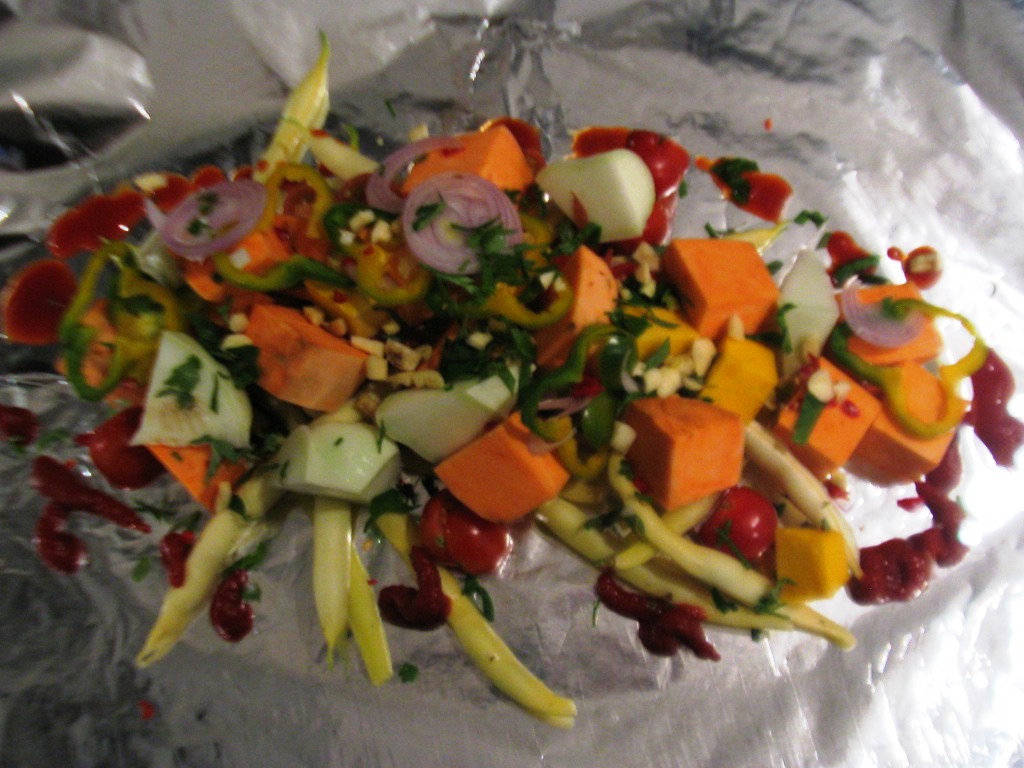
You know what?  I grew every vegetable in this vegetable package and they are all in season. There is squash, sweet potato, red onion, butter beans, capsicum, tomato, pumpkin, chives and garlic and I added a tiny bit of chili for extra flavour.

Vegetable Packages

Vegetable Packages

The red around the outside is a little bit of tomato paste, then you wrap it in aluminium foil and pop it in the oven. This is the easiest way to cook vegetables perfectly and there is no washing up.  This is for those times when you just don’t want to think about yet another meal, or you have lots of odd veges and you don’t want to wash up.

This is the best time of the year for tomatoes here, once the hot season is over and before the frosts. I have beautiful, absolutely perfect tomatoes with no blemishes and no fruit fly, but really the summer salad season is over so I need to find other uses than lots of salad. Over the real summer, I had grape or cherry tomatoes which are much tougher and more pest resistant than Romas or Grosse Lisse but now I have wonderful quantities of the larger varieties.  I will be making tomato paste but in the meantime there will be lot’s of tomato gravies and these beautiful vegetable packages with tomato flavour.

Share this:

  • Share on X (Opens in new window) X
  • Share on Facebook (Opens in new window) Facebook
  • More
  • Print (Opens in new window) Print
  • Email a link to a friend (Opens in new window) Email
Like Loading...

The Great Pumpkin (*Charlie Brown)

Posted by gardenpathfood on March 3, 2013
Posted in: Autumn foods, Eating Seasons, Recipes, Soil, Spring Jobs, Summer Jobs, The plants in my garden, Winter Foods, Work Season. Tagged: annual, frost, in season, propagate, pumpkin, salad, soil, soup, storage, wholefoods. 6 Comments

Linus would be delighted that ‘The Great Pumpkin(s) ‘ are rising from the pumpkin patch but he might not be so happy if he knew that I IMG_0015fully intend to eat every one of them using the multitude of culinary variations available to me. Pumpkin is the most sensual of vegetables.  You can roast it and have that crisp, rich exterior surrounding smooth, creamy, comforting, sweet and deep flavoured flesh. This is wonderful with meat and vegetables and spectacular in a cold or warm salad, especially with grilled or pan-fried haloumi.

Pumpkin is an amazing colour and half the pleasure of pumpkin soup is the satisfying burnt orange fire colour on a  cold evening. Pumpkin can be sweet, it can be savoury, used for dessert or used for a main.

And here, they are so easy to grow.  Basically I live on a sand hill, admittedly red sand, and the pumpkins love it. They come up in places I have never planted them and colonise the back paddock. This morning I traded with a friend for eggs, so I hope her chooks keep on laying because my pumpkins just keep on producing.

I found out the other day that you can eat pumpkins at just about any stage of growth, even when they are quite young and small. If you had a large patch and planted as soon as the frosts are over, you could have a very long season, as pumpkins will also keep for a long time after they are picked, provided they are in good condition when you pick them, preferably on a dry day and you cut it so a small part of the stalk is attached.  I have kept them for months this way.IMG_0014

Yes, pumpkins take up a lot of room, but they have such a long season, great storage and can be used in so many ways that they are well worth sacrificing a bit of space in return for the assurance of great, home grown produce for a many months of the year.

Every year, I make pumpkin soup and one of the best recipes ever is the Moroccan Pumpkin soup recipe I have included on my new recipe page.

Enjoy!

Share this:

  • Share on X (Opens in new window) X
  • Share on Facebook (Opens in new window) Facebook
  • More
  • Print (Opens in new window) Print
  • Email a link to a friend (Opens in new window) Email
Like Loading...

It’s been awhile…

Posted by gardenpathfood on March 3, 2013
Posted in: Food, Health, Links to other sites, Recipes. Tagged: diabetic., nutrition, plant based diet, pumpkin, Type1 diabetes, Vegan, wholefoods. Leave a comment

It’s been awhile….This is re-pressed from RegularSuziHomemaker  ‘The Whole Journey’ and is a must read if you have any connection to anyone with Type1 diabetes.

Suzi is my daughter and has made the switch to a Plant Based diet. She is very carefully monitoring her insulin levels and general health as is essential for management of diabetes. She has an advantage over most of us, in that she has regular blood tests and check ups and so can get a pretty fair idea of what effect this diet has on her system.

If you have an interest in nutrition for any lifestyle or health issue, you will find this interesting.   ‘The Whole Journey’ also has some amazing recipes and food choices for those of us who just appreciate a few more vegies in our diet than most people do.

Share this:

  • Share on X (Opens in new window) X
  • Share on Facebook (Opens in new window) Facebook
  • More
  • Print (Opens in new window) Print
  • Email a link to a friend (Opens in new window) Email
Like Loading...

One Tough Capsicum

Posted by gardenpathfood on February 13, 2013
Posted in: Autumn foods, Eating Seasons, Food, Health, Links to other sites, Spring foods, Spring Jobs, Summer foods, The plants in my garden, Winter Foods, Winter Jobs, Work Season. Tagged: annual, capsicum, Darling downs, frost, nutrition, perennial, propagate, seedlings, vitamin a, vitamin c. 1 Comment

‘I had a little capsicum’,  and I still do.

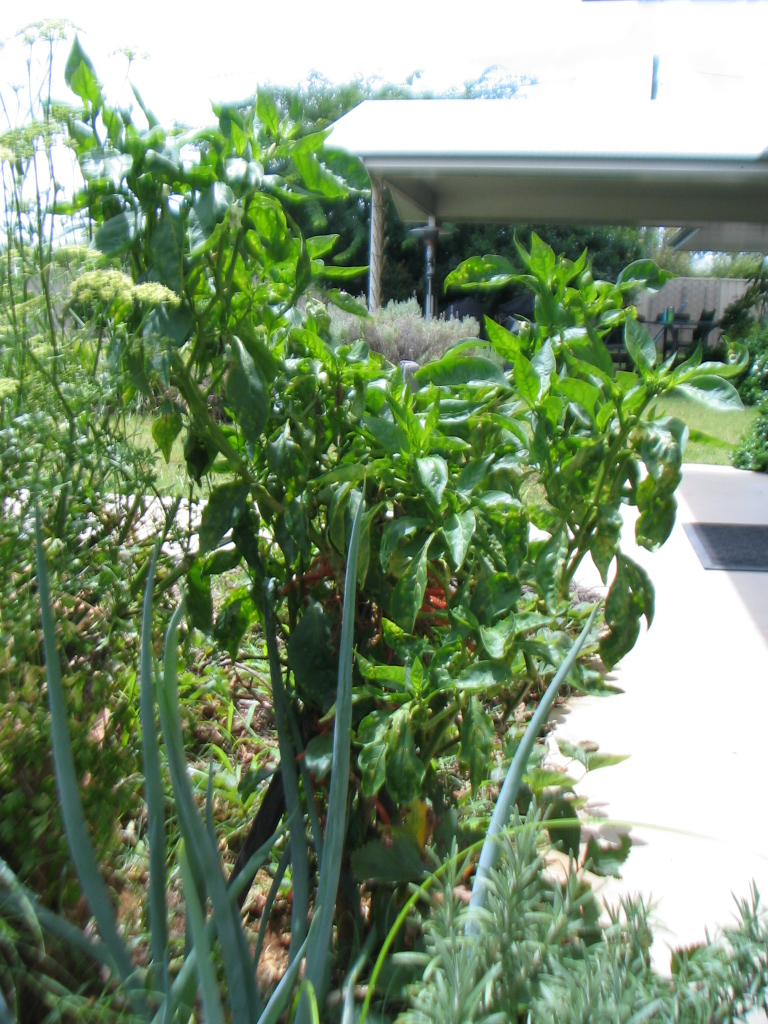
This little capsicum has been in the garden for almost two years and spent most of last winter hibernating beneath a refrigerator box, but even then, it still produced the odd fruit. It has continued to fruit all through summer, just as it did all last summer.  It produces just enough to keep us going and since we eat them on salads and in stir fry and in casseroles, that it not a bad effort for the one little plant.Capsicum

And, it has produced babies with a little help.  I talked about that at http://wp.me/p2tNt0-32

The Gardening Australia website http://www.abc.net.au/gardening/stories/s1866669.htm suggests that capsicums are indeed perennial, but usually we treat them as an annual. I sometimes wonder how much of what we assume as home gardeners comes from commercial agricultural practices and how much we need to relearn to be really effective home vegetable producers.  The garden is really your best teacher for this so just get in there and give it a go.

The capsicum is also an attractive little plant, so given that it is actually a perennial and that it has lovely glossy green leaves and can have bright green, red, yellow or orange fruit, it is a plant that you could easily use as an ornamental in a spot in which you can protect it  in winter.  That is, if you get frost as we do.They grow easily in a pot and this probably ideal as the plant can moved in and out of shelter in winter for an all year round boost to both your food dishes and your immune system.

Raw capsicum  contains high levels of Vitamin C and also  beta carotene which converts to Vitamin A, a great immune system boost.

Share this:

  • Share on X (Opens in new window) X
  • Share on Facebook (Opens in new window) Facebook
  • More
  • Print (Opens in new window) Print
  • Email a link to a friend (Opens in new window) Email
Like Loading...

Awesome Asparagus

Posted by gardenpathfood on February 1, 2013
Posted in: Eating Seasons, Food, Health, Links to other sites, Spring foods, Spring Jobs, Summer foods, The plants in my garden, Work Season. Tagged: annual, asparagus, calories, compost, easy, floods, links, location, mulch, nutrition, propagate, wholefoods. Leave a comment

No, my asparagus does not normally look like this when I pick it.  Usually in the six to eight weeks in Spring  (here Spring is September to November) that we are picking asparagus, it usually looks like a bed of mulch with spikes sticking out of it. The trick is to eat enough so that you stay ahead of the spikes and it doesn’t get bushy like this.

Asparagus in January

Asparagus in January

This is December to August bush and it stays this way until I get out the weed eater (brushcutter) and cut it back to ground level in August.

From December to August it doesn’t get watered, it doesn’t get anything but a few weeds pulled.  In August we cut it back, throw a pile of compost, horse manure and mulch on top, water it heavily and wait for results.  Very, very tasty results whether it is eaten raw and fresh, chopped in a salad or cooked as a vegetable.

Asparagus is dead easy to grow, very hard to kill and the quickest and easiest vegetable to prepare for a meal.  What more could you want as the backbone for your garden?

Climate-wise, I grew it in sub-tropical inland Queensland as well as down here near the border with New south Wales.

The people at http://www.nutrition-and-you.com/asparagus.html list the many benefits of asparagus including ‘Asparagus is a very low calorie vegetable. 100 g fresh spears give only 20 calories. More calories will be burnt to digest than gained, the fact, which fits into the category of low calorie or negative-calorie vegetables,’ but to me asparagus is also one of the best and most satisfying vegetables you can grow.

And Double bonus!!!  We have just had floods, although my house remained high and dry, but the drenching rain has kick started the asparagus again and we have eaten it every night for the last two weeks.  Asparagus in January!!

Share this:

  • Share on X (Opens in new window) X
  • Share on Facebook (Opens in new window) Facebook
  • More
  • Print (Opens in new window) Print
  • Email a link to a friend (Opens in new window) Email
Like Loading...

Strawberry slaughter

Posted by gardenpathfood on January 26, 2013
Posted in: Autumn jobs, Eating Seasons, Food, Spring foods, Summer foods, Summer Jobs, The plants in my garden, Work Season. Tagged: propagate, seedlings, strawberries. Leave a comment
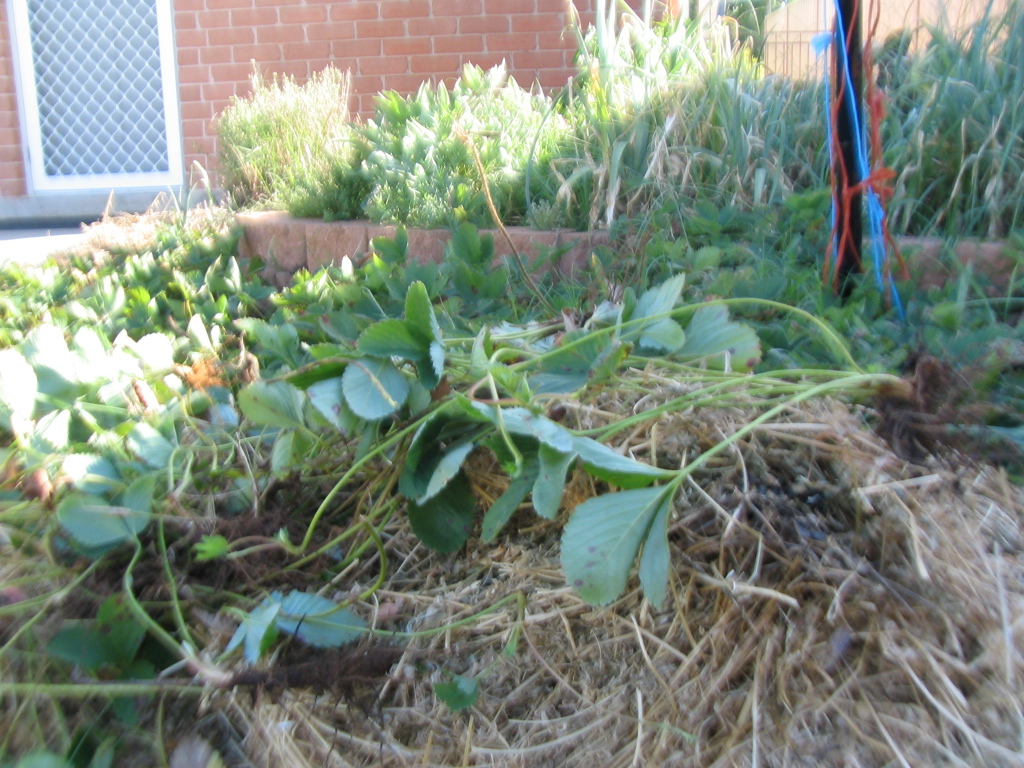
IMG_0070

Discarded plants waiting for a new home

Strawberries are tough old things.  It has been over 40 degrees a lot of days here but I decided to thin my strawberry patch and plant the discarded runners somewhere else.  To tell the truth, I wasn’t too concerned if they lived or not, I was more interested in rejuvenating my strawberry bed and getting rid of as many cooch runners as I could.  Once I’ve finished thinning, I will behead what’s left.  It’s gruesome but my strawberry patch will love me for it.

Well, I forgot to water the ones I planted out but luckily a week or so later, we had our own personal town flood with 140 ml overnight just for us and no one else outside a ten kilometer radius.  Gotta love this weather.

Those poor little transplanted strawberries which had brown crunchy leaves, started to produce new leaves in their centres  et viola, I have a new strawberry patch in the outer garden.  How good is that!

So now, instead of the punnet or two punnets of strawberries we have been getting every morning for the last couple of years from August to Christmas, we can look forward to lots, lots more.

Strawberries are magic!

Share this:

  • Share on X (Opens in new window) X
  • Share on Facebook (Opens in new window) Facebook
  • More
  • Print (Opens in new window) Print
  • Email a link to a friend (Opens in new window) Email
Like Loading...

Up the Sprout

Posted by gardenpathfood on January 17, 2013
Posted in: Autumn foods, Autumn jobs, Eating Seasons, Health, Links to other sites, Spring foods, Spring Jobs, Summer foods, Summer Jobs, Winter Foods, Winter Jobs, Work Season. Tagged: alfalfa, extreme heat, hot, lettuce, links, mustard, nutrition, radish, seeds, snow pea, sprouts, Summer Jobs. Leave a comment

Well, I don’t know about you but we have been having over 40 degree days here and the nights aren’t a lot better.  Like people from the Arab world, we are better to close the house up completely and stay inside where it’s cool than to open it up to the hot wind.  At least it is, if your house is designed to do that.  If not, then like most Australians, it’s switch on the air conditioner and use even more electricity.

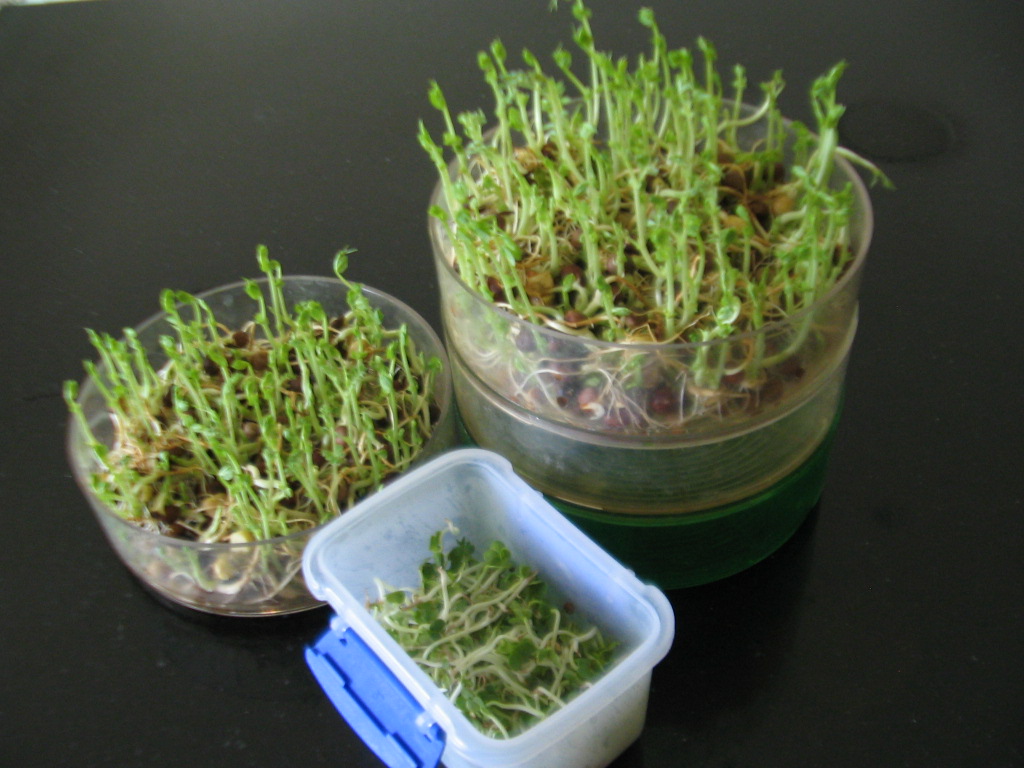
I was also away for twelve days and in that time we had one shower of rain and a neighbour watered once.  Needless to say, although all Sproutsmy plants survived, they are taking a little bit of time to recover and produce, and the lettuce has completely gone to  seed. Even without this extreme heat, it is hard to grow lettuce or cabbages here in the hot months so….go the sprouts.

I use alfalfa, radish and mustard seed to sprout as a lettuce substitute and I use snow peas for both salads and stir fries. It takes a little more attention to grow sprouts successfully in the hot weather as any that don’t sprout are inclined to rot and smell pretty quickly, if you don’t sort them out early.

I use that little spouting system you see on the right which has a container on the bottom to catch water.  Usually, I lightly cover the bottom of one tray with the alfalfa mix and bottom of another with the snow peas then by the time the alafalfa mix is ready to use, the snow peas are too tall (as in the photo) to be confined in a middle tray any more.  The alfalfa takes about three days before use, but the snow peas take about two days longer. These will grow and thicken quite a bit in the next two days, whereas the alfalfa in the container will be stored in the fridge for use in sandwiches for the next couple of days and I can use the tray to start another lot, or I could have one going already. There are 4 trays.

The larger seeds like the snow peas or mung beans, I also like to soak for a couple of hours to overnight to give them a bit of a head start as well, but I find it is not necessary for the small seeds.

So why go to all this bother? There is an excellent article at :

http://www.care2.com/greenliving/10-reasons-to-eat-sprouts.html#ixzz2I6s3bvYn  which gives ten health reasons for eating sprouts but I have a few others.

  • They ‘re great when you are travelling, especially in remote areas as you don’t need a fridge, just water every now and then.
  • They look wonderful on a salad and take up less room than a lettuce .
  • My mother, who is now 83 used to grow them when they lived out west as they offer fresh greens for a minimal cost and you can grow them all year round and store the seed for years.

I get my seed sent out from  http://www.livingapartment.com.au/Products/Seeds-for-Sprouting which seems to work out fairly reasonably.

Share this:

  • Share on X (Opens in new window) X
  • Share on Facebook (Opens in new window) Facebook
  • More
  • Print (Opens in new window) Print
  • Email a link to a friend (Opens in new window) Email
Like Loading...

Squish Squash, Eggplant and False Teeth

Posted by gardenpathfood on December 17, 2012
Posted in: Autumn foods, Eating Seasons, Food, Recipes, Summer foods, The plants in my garden, Work Season. Tagged: annual, aubergine, chokos, cooking, eggplant, in season, squash, wholefoods. Leave a comment

I would have to say that squash and eggplant were not vegetables I was introduced to when I was young, and it has taken a while for me to learn to cook with them and even longer for my husband to learn to eat them.December harvest

This photo is my harvest for December and you will see both eggplant and a giant squash. These really should be only about 8 cm across, but mine are like small pumpkins.

They are extremely edible though, rather like young choko, and like choko, they only take a few minutes to steam. I suspect they go completely to mush if they are cooked much longer, which is probably why a lot of people hate them.

I have come to the conclusion that the previous generation’s tendency to cook vegetables to mush was probably because so many of them had false teeth and hate chewing.

Eggplant is one of the most versatile vegetables out and the newer varieties don’t need to be salted to get rid of bitterness the way some of the older one’s did.  I still do though, just putting the sliced eggplant in a dish with salt for 1/2 an hour or so and then washing it off before I use it.

The night this photo was taken, I had cooked it by rolling it in egg and rice crumbs, then frying (yes frying) it with crumbed whiting. It soaked up the oil and the fish flavour and was amazing.

I also often use it in rissoles or tacos or spag bog, any mince dish, to reduce the amount of meat and improve the texture.

Share this:

  • Share on X (Opens in new window) X
  • Share on Facebook (Opens in new window) Facebook
  • More
  • Print (Opens in new window) Print
  • Email a link to a friend (Opens in new window) Email
Like Loading...

Vale Kale

Posted by gardenpathfood on December 12, 2012
Posted in: Autumn jobs, Eating Seasons, Food, Health, Links to other sites, Spring foods, The plants in my garden, Winter Foods, Work Season. Tagged: annual, in season, kale, nutrition, silverbeet, wholefoods. 1 Comment

I have had kale in the garden, the first time I’ve grown it but I will definitely be putting more in. I had it planted near the silverbeet and often picked them and steamed them together, putting just a little bit of lemon juice on top before they were served.IMG_0386

Apart from the fact that they both have an incredibly long season and so are a very useful and hassle free vegetable, they look so wonderful in the garden among the other plants.

The kale is the silver plant on the right with young silverbeet to it’s left.

But now the kale is looking a bit worse for wear and it is not just because the bugs are eating it. We have had an incredibly hot couple of weeks and kale gets bitter under hot conditions so for the moment, until I replant in February, it is vale kale.

I will leave you with this message:

Kale is one of the healthiest vegetables  http://www.whfoods.com/

  • Kale can provide you with some special cholesterol-lowering benefits if you will cook it by steaming. The fiber-related components in kale do a better job of binding together with bile acids in your digestive tract when they’ve been steamed. When this binding process takes place, it’s easier for bile acids to be excreted, and the result is a lowering of your cholesterol levels. Raw kale still has cholesterol-lowering ability—just not as much.
  • Kale’s risk-lowering benefits for cancer have recently been extended to at least five different types of cancer. These types include cancer of the bladder, breast, colon, ovary, and prostate. Isothiocyanates (ITCs) made from glucosinolates in kale play a primary role in achieving these risk-lowering benefits.

Share this:

  • Share on X (Opens in new window) X
  • Share on Facebook (Opens in new window) Facebook
  • More
  • Print (Opens in new window) Print
  • Email a link to a friend (Opens in new window) Email
Like Loading...

Posts navigation

← Older Entries
Newer Entries →
  • Recent Posts

    • Chestnut Season again
    • Never say Die
    • Blown out of the Water..
    • Snakes Alive..It’s snake season
    • Ahhg…the Veges are going to Eat Me
  • Categories

    • Autumn foods
    • Autumn jobs
    • Background Information
    • Community Gardens
    • Eating Seasons
    • Food
    • Garden Accessories
    • Health
    • Links to other sites
    • Places to Visit
    • Quotes
    • Recipes
    • Soil
    • Spring foods
    • Spring Jobs
    • Summer foods
    • Summer Jobs
    • The plants in my garden
    • Winter Foods
    • Winter Jobs
    • Work Season
  • Your Comments

    Nos Canisters's avatarNos Canisters on Kang Kong
    laughing gas canisters's avatarlaughing gas caniste… on Kang Kong
    team name's avatarteam name on The Great Pumpkin (*Charlie…
    google authorship for business's avatargoogle authorship fo… on Blown out of the Water..
    ออกแบบเสื้อ's avatarออกแบบเสื้อ on Kang Kong
  • Archives

    • June 2014
    • October 2013
    • September 2013
    • August 2013
    • June 2013
    • April 2013
    • March 2013
    • February 2013
    • January 2013
    • December 2012
    • November 2012
    • October 2012
    • September 2012
    • August 2012
    • July 2012
    • June 2012
    • May 2012
  • Blogroll

    • Can O Worms
    • Discuss
    • Eating Well and Pumpkin Soup Eating Well and Pumpkin Soup
    • FructoseFreeMe
    • Get Inspired
  • Meta

    • Create account
    • Log in
    • Entries feed
    • Comments feed
    • WordPress.com
Create a free website or blog at WordPress.com.
Garden Path Food
Create a free website or blog at WordPress.com.
Privacy & Cookies: This site uses cookies. By continuing to use this website, you agree to their use.
To find out more, including how to control cookies, see here: Cookie Policy
  • Subscribe Subscribed
    • Garden Path Food
    • Join 30 other subscribers
    • Already have a WordPress.com account? Log in now.
    • Garden Path Food
    • Subscribe Subscribed
    • Sign up
    • Log in
    • Report this content
    • View site in Reader
    • Manage subscriptions
    • Collapse this bar
 

Loading Comments...
 

    %d