You may not think it very exciting, but I have a whole trailer load of organic compost.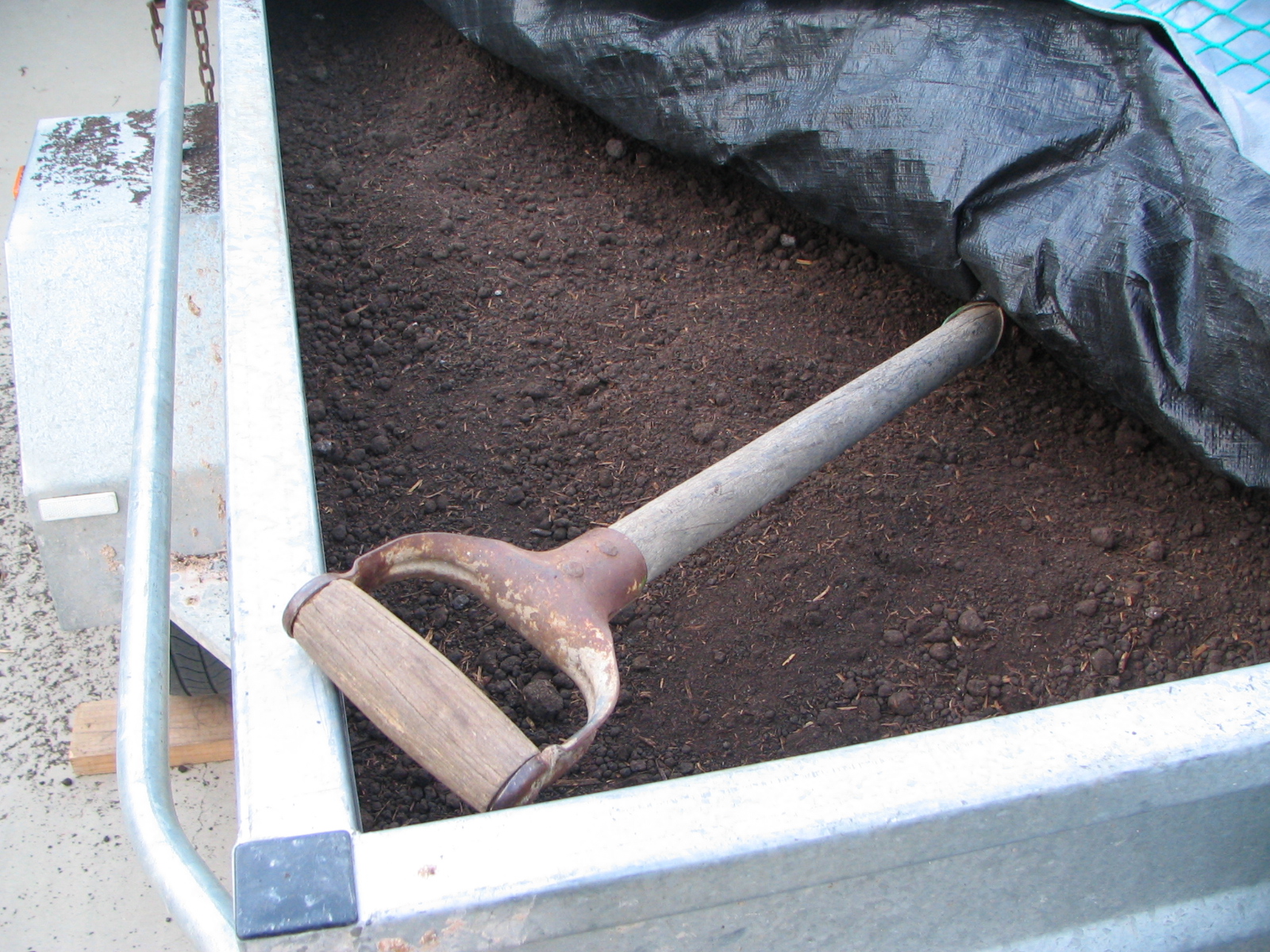
We went to a Charity auction last Saturday night and an opportunity to visit our local organic wheat farm to pick up a load of compost was irresistible, so we bought the trailer load.
You have to admire people who put their whole earning capacity on the line to improve their farming practices and these guys do it with such grace and enthusiasm.
The compost is made using wheat straw and any other organic material such as lot feed manure, chook manure and whatever else can be obtained but is mixed and composted according to strict guidelines. In fact, the person advising this farm is an Amish man from America and it is an Amish method of composting. It is quite impressive to see 800 tonnes of compost sitting there, waiting to be spread when you know the painstaking work and testing that has gone into its production.
The aim of the compost, at this large scale, or any other is to kick start and sustain the microbial life of the soil, which improves its water holding capacity and ability to support your plants.
Good compost improves the structure of any soil from clays to sandy loams. In clays it helps to create air spaces and increase water absorbtion (reducing runoff), while the course particles in sandy soils are unified allowing the soil to retain moisture and nutrients longer rather than leaching quickly.


 Garden Path Food