Garden Path Food

The pleasure and peace of growing, harvesting and eating your own food

  • About
  • Bones of the Garden
  • Philosophy
  • Recipes
    • Moroccan Pumpkin Soup
  • The Garden Path
  • This Month’s Harvest

Sci-Fi Worms

Posted by gardenpathfood on August 9, 2012
Posted in: Spring Jobs, The plants in my garden, Work Season. Tagged: capsicum, frost, pumpkin, seedlings, worms. Leave a comment

My worms have recovered after their recent adventures, courtesy of the Dog, and I have made a wonderful discovery.

Hiding in the forest

Pumpkins love to sprout in the worm farm and so do capsicums and probably quite a few other things.

I end up with an absolute forest of pumpkin seedlings in there and the worms hide in there like elves in the forest, albeit snaky elves. I’ve observed these seedlings for a long time now and it will soon be time to plant them out, when the frosts are almost gone, so I thought I would see if capsicum seeds would do the same.

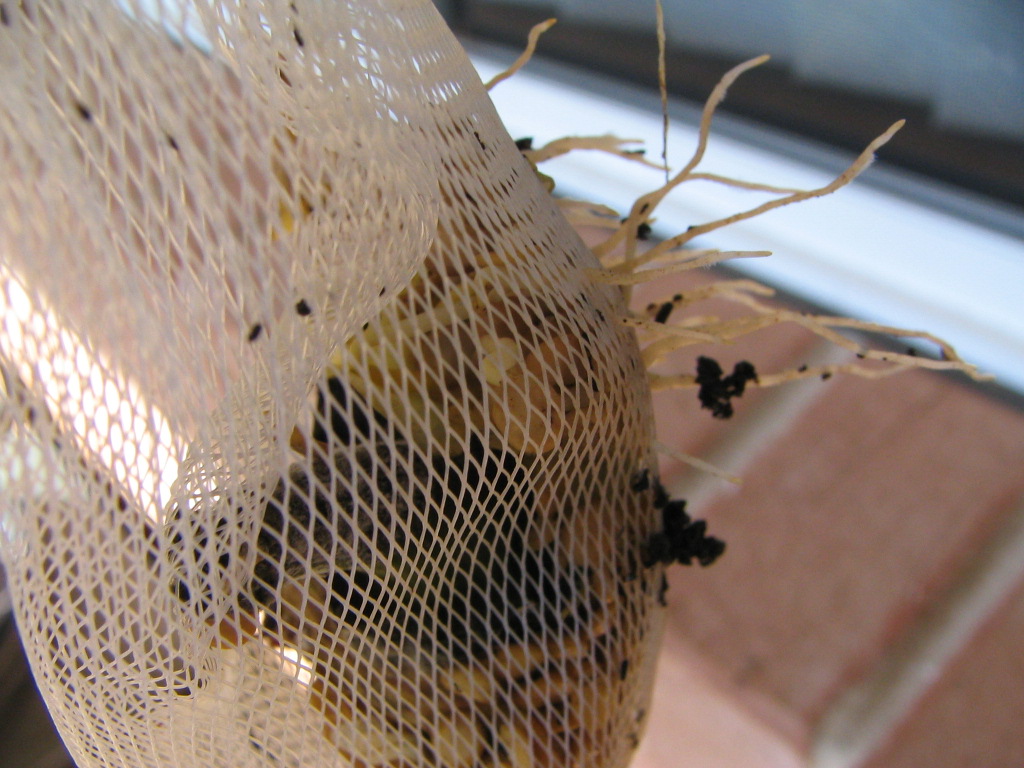
These seeds are fairly small, so I put them in a garlic bag, left over from that shooting garlic I had, and popped it in the worm farm.  Voilẚ,  I have capsicum seedlings starting.

Baby capsicums

Share this:

  • Share on X (Opens in new window) X
  • Share on Facebook (Opens in new window) Facebook
  • More
  • Print (Opens in new window) Print
  • Email a link to a friend (Opens in new window) Email
Like Loading...

It’s all in the eyes

Posted by gardenpathfood on August 3, 2012
Posted in: Food, The plants in my garden, Winter Jobs, Work Season. Tagged: chokos, frost, potatoes, propagate. Leave a comment

There was a douzy of a frost this morning and for the third morning in a row, no hot water, since our solar hot water system had frozen up again.  The gentleman of the house went off to work smelly and not particularly happy.

Potatoes and chokos getting ready for spring

This is the reason I don’t plant out potatoes early in the year in this place. Further north I could get two crops in by planting in March and September but here, I buy the seed potato when I can get it and leave it in a basket in the shed, along with the sprouting chokos until the frosts are almost gone.

I should be able to plant soon though, as a good layer of hay and soil over the sprouting potatoes will protect them until the frost is gone.

In fact, each year I do have a little crop which sprouts from volunteers left in the ground from the year before so I spend the winter anxiously covering them with mulch every time it looks like the frosty mornings are back but it is worth the effort, as I love those little baby potatoes that you get with your own crop and which are never the same when you buy them.  They are like tasty little soft nuts and are wonderful in a stew or casserole, or served with butter and herbs.

Share this:

  • Share on X (Opens in new window) X
  • Share on Facebook (Opens in new window) Facebook
  • More
  • Print (Opens in new window) Print
  • Email a link to a friend (Opens in new window) Email
Like Loading...

Take a leek

Posted by gardenpathfood on July 30, 2012
Posted in: Autumn jobs, Eating Seasons, Food, Health, Spring foods, The plants in my garden, Winter Foods. Tagged: leek, leel, propagate, retoon. Leave a comment

I think the leek is a seriously underestimated vegetable.! Seriously! Underestimated!
A retooned leek

Everyone I speak to about leeks says ‘They’re supposed to be good in a stew or something aren’t they?’  Yes they are good in a casserole, or a warm vegetable salad, but they are even better as a simple steamed vegetable with a little bit of pepper for extra taste.

Leeks make wonderful soups, whether they are part of a potato and leek soup for example or as a clear soup on their own.

They have the distinction of being a great diuretic, so if you do have a bit of bloating, a bowl or two of leek soup or leeks for dinner at night regularly will probably help. This is definitely a tastier way to go than taking pills, unless you really have to, of course.

In the garden, the leek is easy to grow and always looks good, nice and tidy.  I usually plant them in mid-year as seedlings, and they take 6 months or so to really produce. The good thing about them is that they can stay in the ground for ages, and you can pick them off one at a time.  The other good thing, is that sometimes you can get a retoon.  I don’t pull them up, I cut them off at the base and as you see in the photo, they will reshoot.  The ready-to-eat leek in the photo, is one that reshot from last year.

A previously cut leek

If you don’t get around to picking them, then they will usually seed in the second year, and the result can be seen in the third photo- from the crop that I planted two years ago.

Not everyone loves the randomness of leaving things to grow where they seed themselves, so you may want to transplant these little opportunity babies.

Self seeded leeks

Share this:

  • Share on X (Opens in new window) X
  • Share on Facebook (Opens in new window) Facebook
  • More
  • Print (Opens in new window) Print
  • Email a link to a friend (Opens in new window) Email
Like Loading...

Wonderful Oriental Cabbage

Posted by gardenpathfood on July 24, 2012
Posted in: Autumn jobs, Eating Seasons, Food, Health, Spring foods, The plants in my garden, Winter Foods, Winter Jobs, Work Season. Tagged: annual, chinese cabbage, pesticides. Leave a comment

I’m not entirely sure, but I think the ones I have at the moment are called a Napa Cabbage.

Often, I just buy the seedlings so I am a bit dependent on what is available at the time, but I find a mixed punnet of oriental cabbage can be really good.

My main reason for loving these is that like mignonette lettuce, you can just leave them in the ground and pick the leaves from the centre and just about watch them regrow and they are so versatile.

I use them is stir fry, in soups in casserole and even, like spinach, on top of a pizza.

If you grow just one thing in the garden, these would be it and my reason for this is to do with sprays and chemicals.

Our farm was next door to a commercial cabbage grower and after watching him spray every second or third day, I decided I would never eat commercial cabbage again. Those cabbages were ‘spray sandwich’.  Every time there was a new leaf there was a layer of pesticide.  No thanks.

Share this:

  • Share on X (Opens in new window) X
  • Share on Facebook (Opens in new window) Facebook
  • More
  • Print (Opens in new window) Print
  • Email a link to a friend (Opens in new window) Email
Like Loading...

Oregano Invasion

Posted by gardenpathfood on July 16, 2012
Posted in: Autumn foods, Autumn jobs, Eating Seasons, Food, Soil, Spring foods, Summer foods, The plants in my garden, Winter Foods, Work Season. Tagged: herbs, oregano, soil, worms. Leave a comment

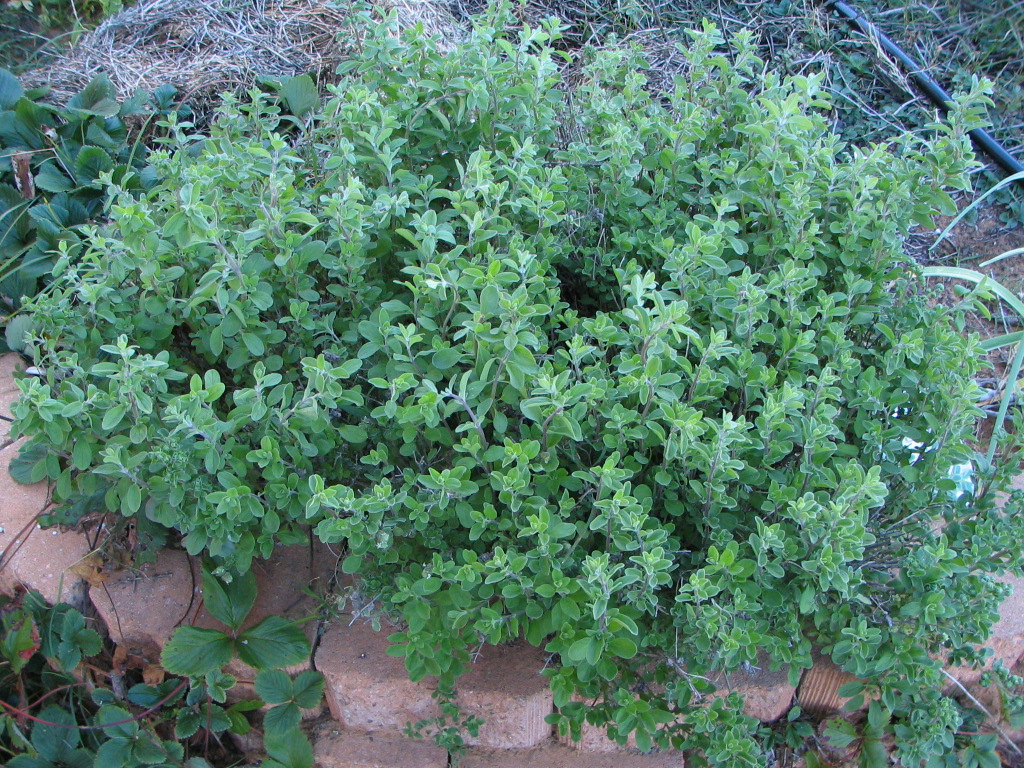
All that is left of the poor old oregano

Three years ago, I planted oregano in the raised garden bed.

Be warned, oregano is aggressive so I would suggest that you don’t plant it in an open garden bed. It had taken over most of the second tier of the garden and was busily trying to invade the top.

My raised garden has been looking a little ragged between the oregano and the strawberries which had both run rampant, with a bit of couch thrown in for extra weeding.  I don’t mind the strawberries being wild, but there is only so much oregano you can eat.

Usually, I can manage to keep the couch in the strawberries under control, but the oregano and couch share a very similar root system and became inextricably entwined.  At last, I decided I needed to get tough and I have dug it all out.  Underneath it, the soil was beautiful with worms and grubs and beautiful texture, so I suspect it has acted as a great soil improver, while providing me with more oregano than I could ever use.

I gave some of the runners to an Italian friend who uses oregano on his magnificent pizzas, replanted some and disposed of the rest where they won’t invade anyone’s garden or lawn.

Share this:

  • Share on X (Opens in new window) X
  • Share on Facebook (Opens in new window) Facebook
  • More
  • Print (Opens in new window) Print
  • Email a link to a friend (Opens in new window) Email
Like Loading...

Northey Street Community Gardens

Posted by gardenpathfood on July 10, 2012
Posted in: Community Gardens, Links to other sites, Places to Visit, Soil. Tagged: comfrey, Community gardens, compost, Northey Street, soil. Leave a comment

I had the opportunity to visit the Northey Street Community Gardens in Windsor, Brisbane last week and learnt a lot about the way the gardens work and some of the wonderful community  partnerships they have.

It was impressive that all the stable sweepings from the EKKA are able to be used in the timber tree plot at Northey Street and that much of the compost used in the gardens comes from local contractors, who are able to dump lawn clippings and chippings in the big bins at the gardens for composting.

The compost system is on quite a large scale as you can see in the photographs.  These big mesh bins are lined with shadecloth and placed  on one end of the three board path you can see in the left hand photo, and then covered with tarpaulin.

Once filled the two halves are clipped together and they are rolled along the track, being turned a few centimetres at a time until they reach the other end of the track- at which time the compost is ready to use. Ingenious!  Comfrey is grown in the gardens to be used as a compost starter.

See http://www.cleanup.org.au/au/LivingGreener/composting.html for  good suggestions for a compost mix, but basically you should have both green ingredients (scraps and clippings) and brown (hay, dry leaves, sticks, twigs), make sure it is aerated by either turning or piping and that it is moist but not too wet.   A good compost mix should not smell.


Share this:

  • Share on X (Opens in new window) X
  • Share on Facebook (Opens in new window) Facebook
  • More
  • Print (Opens in new window) Print
  • Email a link to a friend (Opens in new window) Email
Like Loading...

Have you got worms?

Posted by gardenpathfood on July 6, 2012
Posted in: Soil. Tagged: location, soil, worms. 1 Comment

I was going to photograph my worms for you but they have suffered a slight accident and are a little camera shy at the moment. So all my wiggly worms had a half hour or so of freedom before I came home, after suffering an earthquake and probably a falling dog.

 I picked them all up and hope that they will survive since I have become rather fond of the worms, surprisingly since the smallest animal I have ever owned has been a cat.

My worm farm is not high tech, just one of those commercial black plastic ones that are sold in hardware stores, but it does a great job. The only drawback I can see is that you need to be very careful about it’s location when you live in a place with a climate as variable as this.  I had my last lot of worms for 2 years through frost and burning heat until one extremely hot day and they all up and died.

So, I thought long and hard about where they are located this time and for the last two years it has worked, in spite of some very hot days last summer.

So, I just used a cheap potting mix to set up the farm this time and top it up regularly with scraps and egg cartons and occasionally an old towel- they eat the lot. I never put in onions or citrus and I do occasionally sprinkle dolomite to combat any acidity.

The soil in this place was very flogged and has very little structure, being very sandy and I did not encounter any worm-life in the gardens at all when we set them up.  Over the last couple of years, I have managed to farm some of the worms out but also the worm liquid has often been full of eggs. I am starting to notice a lot of wildlife in the vegetable gardens now, every time I move a bundle of mulch.

Another surprise has been that once the worms established, I have very rarely had to wet the soil for them to produce liquid so I’m not sure how that happens, but the soil inside the box seems to stay a nice mulchy, moist consistency.  This may all have changed since this afternoon’s dogquake of course!

Share this:

  • Share on X (Opens in new window) X
  • Share on Facebook (Opens in new window) Facebook
  • More
  • Print (Opens in new window) Print
  • Email a link to a friend (Opens in new window) Email
Like Loading...

Babies in the garden

Posted by gardenpathfood on July 2, 2012
Posted in: The plants in my garden. Tagged: garlic, propagate. 2 Comments

My daughter bought some little mesh bags of garlic at the markets a while ago and gave me a few.  I’ll have to say it was more garlic than even we were likely to use before it went off, but ..it didn’t rot or at least most of it didn’t.

Quite a bit of it put out little shoots, so I did what the KitchenGardenInternational  video http://www.youtube.com/user/kitchengardeners?feature=watch  said and just kept the biggest of the cloves for planting, and put them in the garden pointy end up, about 2cm into the soil. This was about 2 weeks ago.

A couple of days ago I noticed little shoots in the spot where I planted the cloves and I have lovely little garlic plants coming along beautifully.  There is a new one or two every day and the remaining garlic on the bench in the kitchen is still shooting. It’s a case of one for the pot, one for the garden at the moment so I am hoping for a great crop of garlic next year.

Share this:

  • Share on X (Opens in new window) X
  • Share on Facebook (Opens in new window) Facebook
  • More
  • Print (Opens in new window) Print
  • Email a link to a friend (Opens in new window) Email
Like Loading...

Real thyme

Posted by gardenpathfood on July 2, 2012
Posted in: Autumn foods, Eating Seasons, Food, Health, Links to other sites, Quotes, Spring foods, Summer foods, Winter Foods. Tagged: herbs, nutrition, thyme, wholefoods. Leave a comment

From ‘In Defence of Food’ by Michael Pollan,   Penguin Books,  p64/65,  2008

‘Indeed, to look at the chemical compostion of any common food is to realise just how much complexity lurks within it. Here’s a list of just the antioxidents that have been identified in a leaf of garden variety thyme: alanine, anethole essential oil, apigenin, ascorbic acid, beta-carotene, caffeic acid, camphene  ‘  (You get the picture, there are  29 more).

He goes on to say  ‘This is what you ingest when you eat food flavoured with thyme. Some of these chemicals are broken down by your digestion, but others go on to do various as-yet-undetermined things to your body: turning some gene’s expression on or off, perhaps or intercepting a free radical before it disturbs a strand of DNA deep in some cell.  It would be great to know how this all works, but in the meantime we can enjoy thyme in the knowledge that it probably doesn’t do any harm (since people have been eating it forever) and that it might actually do some good ( since people have been eating it forever) and even if it does nothing at all, we like the way it tastes.

Share this:

  • Share on X (Opens in new window) X
  • Share on Facebook (Opens in new window) Facebook
  • More
  • Print (Opens in new window) Print
  • Email a link to a friend (Opens in new window) Email
Like Loading...

Lemon Thyme

Posted by gardenpathfood on June 25, 2012
Posted in: Autumn foods, Eating Seasons, Food, Recipes, Spring foods, Summer foods, The plants in my garden, Winter Foods. Tagged: June. Leave a comment

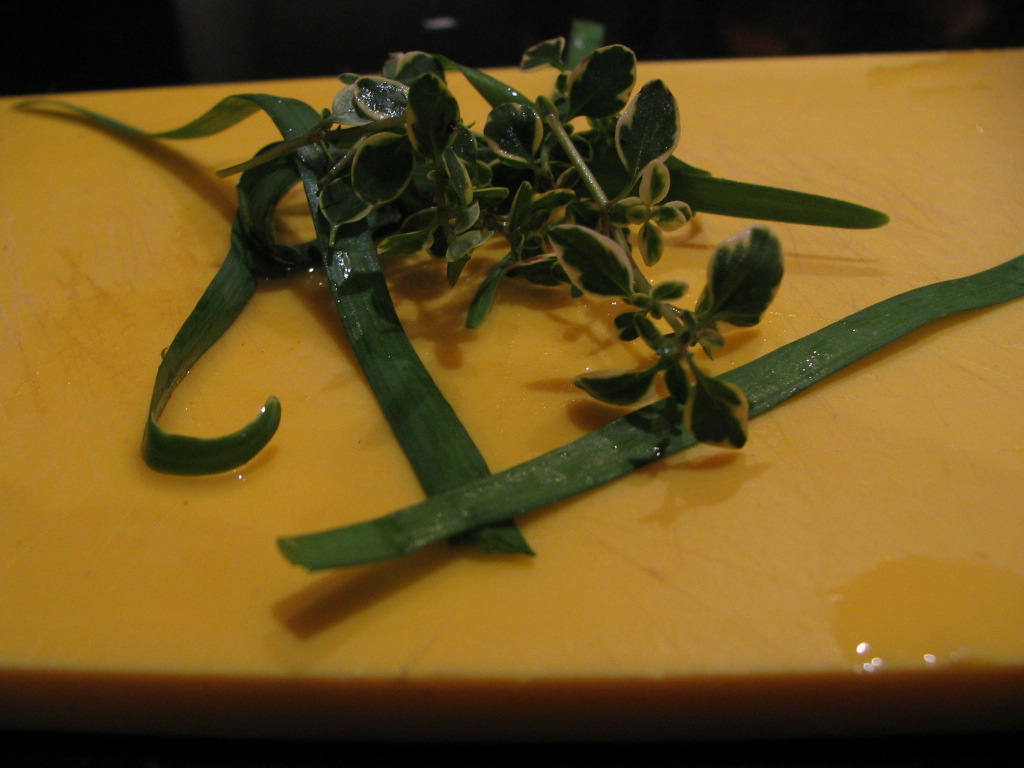
Since my original thyme bush was looking a little time-worn, I couldn’t resist this beautiful little specimen of lemon thyme.  It is such an attractive little plant and has that wonderful tangy thyme smell with a touch of lemon.

We have recently filled the freezer with winter whiting caught off the Fraser Coast, and lemon thyme seemed like it could be a great complement to whitefish.  I tried it the other night with a little bit of chives and poached in a white wine stock.

My other thyme bush has come back after a heavy trimming, so I will still have ordinary thyme to use in my scrambled eggs as well.

Lemon thyme and chives for the fish

Lemon Thyme

Share this:

  • Share on X (Opens in new window) X
  • Share on Facebook (Opens in new window) Facebook
  • More
  • Print (Opens in new window) Print
  • Email a link to a friend (Opens in new window) Email
Like Loading...

Posts navigation

← Older Entries
Newer Entries →
  • Recent Posts

    • Chestnut Season again
    • Never say Die
    • Blown out of the Water..
    • Snakes Alive..It’s snake season
    • Ahhg…the Veges are going to Eat Me
  • Categories

    • Autumn foods
    • Autumn jobs
    • Background Information
    • Community Gardens
    • Eating Seasons
    • Food
    • Garden Accessories
    • Health
    • Links to other sites
    • Places to Visit
    • Quotes
    • Recipes
    • Soil
    • Spring foods
    • Spring Jobs
    • Summer foods
    • Summer Jobs
    • The plants in my garden
    • Winter Foods
    • Winter Jobs
    • Work Season
  • Your Comments

    Nos Canisters's avatarNos Canisters on Kang Kong
    laughing gas canisters's avatarlaughing gas caniste… on Kang Kong
    team name's avatarteam name on The Great Pumpkin (*Charlie…
    google authorship for business's avatargoogle authorship fo… on Blown out of the Water..
    ออกแบบเสื้อ's avatarออกแบบเสื้อ on Kang Kong
  • Archives

    • June 2014
    • October 2013
    • September 2013
    • August 2013
    • June 2013
    • April 2013
    • March 2013
    • February 2013
    • January 2013
    • December 2012
    • November 2012
    • October 2012
    • September 2012
    • August 2012
    • July 2012
    • June 2012
    • May 2012
  • Blogroll

    • Can O Worms
    • Discuss
    • Eating Well and Pumpkin Soup Eating Well and Pumpkin Soup
    • FructoseFreeMe
    • Get Inspired
  • Meta

    • Create account
    • Log in
    • Entries feed
    • Comments feed
    • WordPress.com
Create a free website or blog at WordPress.com.
Garden Path Food
Create a free website or blog at WordPress.com.
Privacy & Cookies: This site uses cookies. By continuing to use this website, you agree to their use.
To find out more, including how to control cookies, see here: Cookie Policy
  • Subscribe Subscribed
    • Garden Path Food
    • Join 30 other subscribers
    • Already have a WordPress.com account? Log in now.
    • Garden Path Food
    • Subscribe Subscribed
    • Sign up
    • Log in
    • Report this content
    • View site in Reader
    • Manage subscriptions
    • Collapse this bar
 

Loading Comments...
 

    %d