I love the look of water chestnuts in the garden.
There is a period of a couple of weeks in May when the spikes start to die off that they look a little bit untidy, but the exciting thing then is that they are almost ready to harvest, so it doesn’t matter.
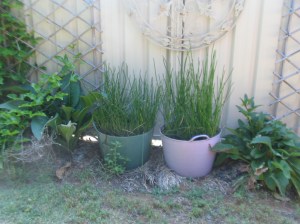
Water Chestnuts in December
I completely forgot to blog when I harvested the bulbs in June but the year goes something like this:
In June/July you plonk some soil/sand/compost in a couple of tubs and then put in some bulbs which you can buy commercially, but this year I replanted from the bulbs I had harvested. Unlike garlic, you can replant the small bulbs and expect to get reasonable chestnuts.
For these two tubs I only need about 6 bulbs total, but somehow this year I must have left a few in the soil because I definitely have more than 6 plants.
Then, put about a 2 cm covering of soil on top and fill the tubs with water to cover the surface by a couple of centimeters. I keep the tubs topped up, which is not hard in winter, until the shoots start to come through as soon as it starts to warm up in September or October. (This is more difficult than it sounds as both the cat and dog prefer the water in the water chestnuts to their own nice clean bucket.)
After that, I keep them moist and let the rain top them up, and although I never really let them dry out , they don’t mind a little bit of exposure. I am very careful in extremely hot weather not to let them dry out completely.
They look wonderful for 8 months of the year, as you see and I will hope to harvest several kilos of lovely, crisp, fresh bulbs in early June. I keep these in a container in the crisper and use them as I need them.
The taste and texture of fresh water chestnut is as different from the tinned variety, as fresh asparagus is from tinned. They are a completely different food experience.
 ut it and go for a third use.




 Garden Path Food